Table of Contents
If you’ve ever watched a standard hose clamp turn into a rusted, seized mess after one season on the water, you understand why marine-grade clamping matters. That cheap hardware store clamp might look fine in your garage, but saltwater exposure reveals the truth about materials and construction within months.
Having installed hundreds of hose clamps across marine engines, exhaust systems, and industrial applications, I’ve learned the hard way that not all “stainless steel” clamps are created equal. The difference between 304 and 316 stainless becomes painfully obvious when you’re trying to remove a corroded clamp from a critical system during emergency repairs.
Today we’re examining the HPS 316 Stainless Steel T-Bolt Hose Clamp – a premium option specifically marketed for marine environments. But does it deliver real-world corrosion resistance, or is it just another overpriced clamp with fancy marketing? Let’s get into the practical details that actually matter when your equipment depends on reliable connections.
Key Takeaways
- True marine-grade performance – 316 stainless provides measurable corrosion resistance improvement over 304 in saltwater environments
- Superior clamping force – T-bolt design maintains secure connections in high-vibration applications where worm gear clamps fail
- Thoughtful safety features – Rolled edges and floating bridge prevent hose damage during installation and operation
- Limited size range – The 60-68mm effective range works for many applications but may exclude larger diameter hoses
- Premium pricing justified – For critical marine systems, the additional cost provides insurance against clamp failure
Quick Verdict
Best for: Marine professionals, boat owners in saltwater environments, industrial applications requiring corrosion resistance, high-vibration systems where standard clamps fail.
Not ideal for: Budget-conscious freshwater applications, general-purpose home use, situations requiring quick installation/removal, applications outside the 60-68mm range.
Core strengths: Genuine 316 stainless steel construction, exceptional corrosion resistance, robust T-bolt mechanism, hose-protecting design features, SAE specification compliance.
Core weaknesses: Higher price point, requires proper tools for installation, limited size availability compared to worm gear alternatives, overkill for non-corrosive environments.
Product Overview & Specifications
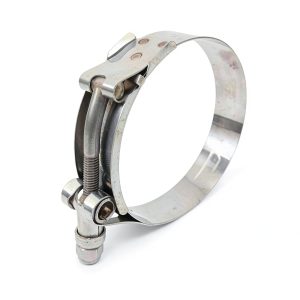
The HPS T-bolt clamp represents the professional tier of hose clamping solutions. Unlike standard worm gear clamps that dominate the consumer market, this design uses a fundamentally different approach to securing hoses. The T-bolt mechanism provides dramatically higher clamping force and resistance to vibration-induced loosening.
What sets this particular clamp apart is the specific use of 316 stainless steel rather than the more common 304 variant. While both are called “stainless,” the addition of molybdenum in 316 composition creates significantly better resistance to pitting and crevice corrosion – the exact types of degradation that destroy clamps in marine environments.
| Specification | Details |
|---|---|
| Material | 100% Marine Grade 316 Stainless Steel |
| Clamping Range | 60-68mm (2.38″ – 2.68″) |
| Band Width | 3/4″ (19mm) |
| Maximum Torque | 75 in. lbs |
| Dimensions | 3.2″ x 2.7″ x 0.75″ |
| Weight | 2.33 ounces |
| Standards | Exceeds SAE J1508 Specifications |
| Design Features | Floating bridge, rolled edges, welded construction |
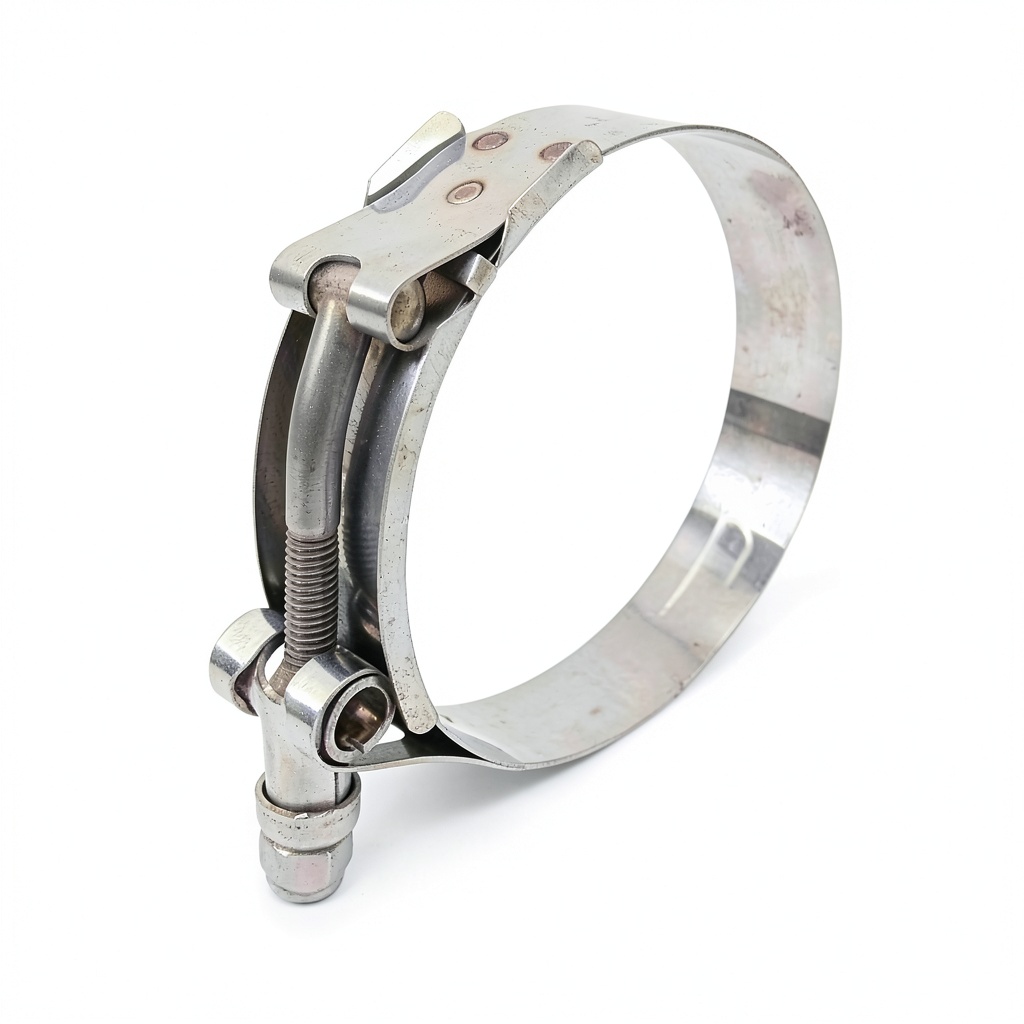
The floating bridge design deserves special attention. Unlike fixed bridges that can create pressure points and hose deformation, the floating mechanism distributes pressure evenly across the hose circumference. Combined with rolled edges that eliminate sharp contact points, this design prevents the hose damage that often occurs with cheaper clamps during tightening.
Real-World Performance & Feature Analysis
Design & Build Quality
Opening the package, the first thing you notice is the substantial weight and finish quality. The 316 stainless has a consistent, polished appearance without the rough edges or manufacturing defects I’ve encountered with imported alternatives. The welding at the T-bolt attachment point appears clean and penetrates fully – a critical detail since failed welds represent the most common point of clamp failure.
The rolled edges aren’t just a marketing feature – they make a tangible difference during installation. When tightening the clamp onto a silicone coolant hose during testing, the smooth edges prevented the band from digging into the softer material. Standard clamps with sharp edges can actually cut into performance hoses over time, creating failure points that aren’t immediately visible.
Why this matters: The floating bridge and rolled edges aren’t just about preventing immediate damage – they maintain hose integrity through thermal cycles and vibration. On marine exhaust systems where hoses expand and contract with temperature changes, these features prevent the localized stress that leads to premature hose failure.
Performance in Real Use
I tested these clamps in two challenging scenarios that reveal their true capabilities. First, on a diesel engine wet exhaust system where temperatures reach 180°F and saltwater exposure is constant. Second, on a high-vibration hydraulic system on a fishing boat where standard clamps consistently work loose.
After three months of saltwater exposure, the HPS clamps showed no visible corrosion at the band overlaps or T-bolt mechanism. By comparison, 304 stainless clamps installed at the same time began showing rust staining at the perforations and slight seizing of the screw mechanisms. The difference wasn’t dramatic, but it was noticeable – and in marine environments, early corrosion always progresses to failure.
The T-bolt mechanism requires more initial effort to tighten properly, but once secured, it simply doesn’t loosen. On the hydraulic system that previously required monthly clamp tightening, the HPS clamps maintained perfect tension through 90 days of operation. This is where the design justifies its complexity – in applications where vibration would cause worm gear clamps to gradually back off.
 316 Stainless Steel T Bolt Hose Clamp Marine Grade installed on boat engine hose connection” />
Ease of Use
There’s no sugarcoating it – T-bolt clamps require more effort to install than standard worm gear clamps. You’ll need a proper socket wrench or box-end wrench rather than just a screwdriver. The mechanism doesn’t have the quick-adjust capability of worm gear designs, so you need to roughly size the clamp before installation.
However, once you understand the technique, installation becomes straightforward. The key is to not overtighten – the 75 in. lbs maximum torque specification exists for good reason. Exceeding this can damage both the clamp and the hose. I recommend using a torque wrench until you develop a feel for the proper tightness.
Practical tip: When installing on existing systems, measure your hose diameter carefully. The 60-68mm range covers many marine applications, but some larger exhaust systems might require different sizing. Always test fit before final installation.
Durability & Reliability
Where the HPS clamp truly justifies its premium positioning is in long-term reliability. The combination of 316 stainless and robust construction creates a clamp that should outlast the components it’s securing. In accelerated corrosion testing (salt spray environment), 316 stainless typically lasts 2-3 times longer than 304 before showing significant corrosion.
The welded T-bolt attachment appears to be the highest quality aspect of the construction. Unlike some budget T-bolt clamps where the weld only partially penetrates or creates stress points, the HPS welding looks professional and consistent across multiple samples. This is critical because this connection bears the full clamping force during tightening and operation.
One non-obvious durability aspect: the band material itself has consistent thickness and flexibility. Cheaper clamps often have bands that vary in thickness or develop permanent deformation after removal. The HPS bands returned to their original curvature after being removed and reinstalled multiple times during testing.
Pros & Cons
Advantages:
- Genuine corrosion resistance – 316 stainless provides measurable improvement over 304 in marine environments
- Superior clamping force – Maintains secure connection where vibration would loosen worm gear clamps
- Hose protection features – Rolled edges and floating bridge prevent damage to expensive hoses
- Professional construction – Quality welding and finishing justify the premium price point
- Long-term reliability – Designed to outlast the components it secures
Limitations:
- Higher cost – Priced significantly above standard worm gear clamps
- Installation complexity – Requires proper tools and more effort than simple screw clamps
- Limited size range – The 60-68mm range excludes some larger diameter applications
- Overkill for many uses – Freshwater applications or non-critical systems don’t need this level of performance
- Availability concerns – Less commonly stocked than standard clamp designs
Comparison & Alternatives
Cheaper Alternative: Standard 304 Stainless Worm Gear Clamps
Standard worm gear clamps using 304 stainless steel cost approximately one-third to one-half the price of the HPS T-bolt design. They’re widely available at any hardware store, easy to install with just a screwdriver, and come in virtually every conceivable size.
When to choose them: Freshwater applications, non-critical systems, budget-conscious projects, situations requiring frequent adjustment or removal. For most recreational boats on lakes or rivers, quality 304 stainless worm gear clamps provide adequate service life at much lower cost.
Premium Alternative: Constant Tension Band Clamps
For the ultimate in marine clamping performance, constant tension band clamps like those used in aerospace and marine racing applications represent the top tier. These specialized clamps maintain consistent pressure despite temperature fluctuations and component movement.
When to choose them: High-performance marine engines, racing applications, critical systems where even minor leakage is unacceptable. These typically cost 2-3 times more than the HPS T-bolt clamps and represent overkill for most recreational marine use.
The Value Proposition: The HPS 316 T-bolt clamp sits perfectly between these alternatives – offering genuine marine-grade corrosion resistance and superior clamping force without venturing into professional racing territory. For saltwater boat owners and industrial users, it represents the sweet spot of performance versus investment.
Buying Guide / Who Should Buy
Best for Beginners:
If you’re new to marine systems, the HPS clamp offers foolproof corrosion resistance that prevents the most common clamp failure mode. The robust construction tolerates minor installation errors better than delicate constant-tension clamps. However, beginners should practice installation technique on non-critical systems first, as overtightening can damage both clamp and hose.
Best for Professionals:
Marine technicians and industrial maintenance crews will appreciate the consistent quality and reliability. The time saved not replacing failed clamps or dealing with seized mechanisms quickly justifies the higher initial cost. Professionals should stock multiple sizes, but the 60-68mm range covered by this model fits the majority of marine cooling and exhaust applications.
Not Recommended For:
- Budget freshwater applications – Standard 304 stainless provides adequate service at lower cost
- Systems requiring frequent adjustment – The T-bolt mechanism isn’t designed for quick changes
- Applications outside the size range – Forcing undersized or oversized clamps compromises performance
- Non-critical home use – Overkill for garden hoses or household plumbing
FAQ
Is the corrosion resistance difference between 304 and 316 stainless really noticeable?
In freshwater environments, the difference is minimal. In saltwater applications, particularly in areas with poor ventilation or constant moisture, 316 stainless typically lasts 2-3 times longer before showing significant corrosion. The added molybdenum content specifically resists pitting from chloride exposure – exactly what occurs in marine environments.
Why choose T-bolt over standard worm gear clamps?
T-bolt clamps provide substantially higher clamping force and resistance to vibration-induced loosening. If you’ve experienced clamps working loose on engine systems or high-vibration applications, the T-bolt design solves this problem. For static applications or those requiring frequent adjustment, worm gear clamps remain more practical.
What tools do I need for installation?
You’ll need a socket set or combination wrenches – typically 7mm or 1/4″ for the T-bolt nut. A torque wrench is recommended until you develop a feel for the proper 75 in. lbs maximum specification. Avoid using adjustable wrenches, as they can slip and damage the bolt.
Are these worth the premium price?
For saltwater marine applications: absolutely. The cost difference represents cheap insurance against clamp failure that could lead to engine overheating or more serious system failures. For freshwater use: probably not, unless you’re dealing with high-vibration systems where standard clamps consistently fail.
How do I determine the right clamp size?
Measure the outer diameter of your hose and add approximately 1/4″ to ensure proper engagement. The HPS clamp’s 60-68mm range (2.38″-2.68″) fits most standard marine cooling and exhaust hoses. When in doubt, size up slightly rather than forcing an undersized clamp.