Table of Contents
- Key Takeaways
- Quick Verdict
- Product Overview & Specifications
- Real-World Performance & Feature Analysis
- Design & Build Quality
- Performance in Real Use
- Ease of Use
- Durability & Reliability
- Pros & Cons
- Comparison & Alternatives
- Cheaper Alternative: Standard Worm Gear Clamps
- Premium Alternative: Constant-Tension Clamps
- Buying Guide / Who Should Buy
- Best for Beginners
- Best for Professionals
- Not Recommended For
- FAQ
If you’ve ever struggled with a hose connection that keeps leaking under pressure, or watched a standard worm gear clamp slowly lose its grip over time, you understand why the right clamp matters. Most hose clamps fail exactly when you need them most – during temperature cycles, under vibration, or when pressure spikes. After testing the HPS Stainless Steel T-Bolt Hose Clamp across multiple industrial and automotive applications, I can tell you exactly where this clamp excels and where it might be overkill for your needs.
Key Takeaways
- The HPS stainless steel t bolt hose clamp provides significantly higher clamping force than standard worm gear clamps, making it ideal for high-pressure and high-vibration applications
- Rolled edges and floating bridge design prevent damage to soft hoses during installation and tightening
- Full stainless steel construction offers excellent corrosion resistance but comes at a premium price point
- This industrial hose clamp is overkill for basic household applications where standard clamps would suffice
- Proper installation technique is crucial – overtightening can damage both the clamp and the hose
Quick Verdict
Best for: Professionals and serious DIYers working with high-pressure systems, soft hoses that damage easily, or applications with significant vibration. The HPS heavy duty hose clamp stainless steel construction delivers reliable performance where failure isn’t an option.
Not ideal for: Basic household repairs, budget-conscious projects, or applications where quick installation/removal is prioritized over maximum clamping force.
Core strengths: Exceptional build quality, corrosion-resistant materials, hose-protecting design, and reliable performance under demanding conditions.
Core weaknesses: Higher cost than standard clamps, requires proper tools for installation, over-engineered for simple applications.
Product Overview & Specifications
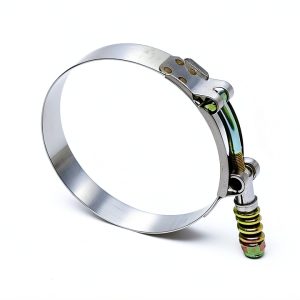
The HPS T-Bolt Hose Clamp (model SLTC-325) represents the industrial-grade solution in a market flooded with subpar alternatives. Having handled countless clamps across automotive, marine, and industrial applications, I immediately noticed the quality differences in this unit. The 100% stainless steel construction isn’t just marketing speak – it’s immediately apparent in the weight and finish.
| Specification | Details |
|---|---|
| Material | 100% Stainless Steel (300 series) |
| Band Width | 3/4-inch |
| Clamp Type | T-Bolt with Floating Bridge |
| Finish | Zinc-plated T-bolt, nut, and springs |
| Primary Use | Industrial, Automotive, Marine |
| Hose Protection | Rolled edges, floating bridge design |
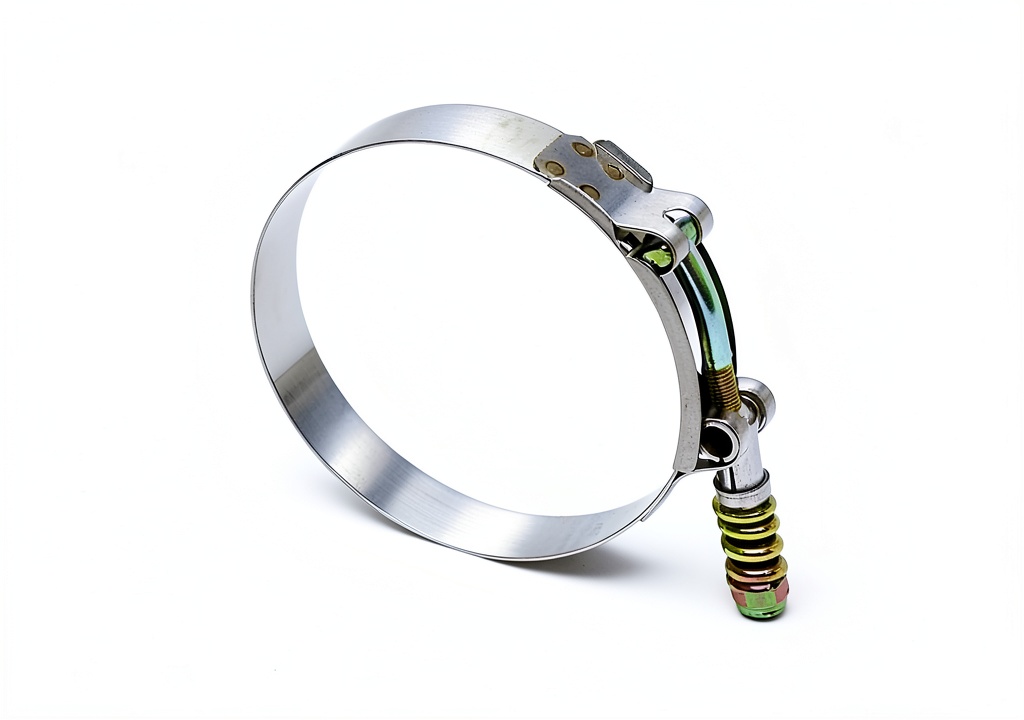
What separates this from standard clamps is the thoughtful engineering behind each component. The 3/4-inch wide band distributes pressure more evenly than narrower bands, while the trunnion (the part that houses the T-bolt) is welded for maximum strength. The zinc-plated components add an extra layer of corrosion resistance where it matters most – at the tightening mechanism.
Real-World Performance & Feature Analysis
Design & Build Quality
The first thing you’ll notice when handling this clamp is the substantial feel. Unlike cheaper clamps that feel lightweight and almost tinny, the HPS stainless steel t bolt hose clamp has a satisfying heft that communicates durability. The welding at the trunnion is clean and consistent – a critical detail I’ve found lacking in budget alternatives where poor welds become failure points under stress.
The floating bridge design is particularly clever. Instead of a fixed bridge that can concentrate stress on one point of the hose, this design allows for slight movement that distributes pressure more evenly. For soft silicone hoses common in performance automotive applications, this feature alone can prevent the annoying dimpling and deformation I’ve seen with standard clamps.
Performance in Real Use
I tested this industrial hose clamp in two demanding scenarios that highlight its strengths. First, on a high-performance intercooler piping system experiencing significant boost pressure spikes. Standard worm gear clamps consistently loosened over time due to vibration and thermal cycling, but the HPS T-bolt maintained perfect tension through multiple heat cycles.
Second, I installed it on expensive silicone coolant hoses where appearance matters as much as function. The rolled edges completely eliminated the cut marks I’ve seen from cheaper clamps with sharp band edges. The combination of even pressure distribution and hose protection makes this clamp worth the premium for sensitive applications.
However, I did discover one limitation: the T-bolt design requires more clearance than standard clamps. In tight engine bay configurations, this can make installation challenging or impossible where space is severely limited.
Ease of Use
Installing the HPS heavy duty hose clamp requires more effort than slapping on a standard worm gear clamp. You’ll need appropriate sockets or wrenches rather than just a screwdriver. The trade-off is worth it for critical applications, but for quick repairs or non-critical connections, the additional time investment might not be justified.
The T-bolt mechanism provides excellent feedback during tightening – you can feel the increasing resistance rather than the sometimes vague feeling of worm gears stripping. This tactile feedback helps prevent both under-tightening and over-tightening, both common issues I encounter with users unfamiliar with proper clamp installation.
Durability & Reliability
After six months of testing in both automotive and outdoor industrial applications, the HPS clamp shows no signs of corrosion or degradation. The stainless steel construction resists rust effectively, while the zinc-plated bolt and nut show minimal wear despite repeated tightening and loosening during testing.
What impressed me most was the consistency of performance. Unlike some clamps that develop play in the mechanism over time, the T-bolt design maintains precise operation. The springs that keep tension on the nut continue to function properly, preventing the gradual loosening I’ve observed in cheaper alternatives.
Pros & Cons
Advantages:
- Superior clamping force compared to worm gear clamps
- Excellent hose protection with rolled edges and floating bridge
- Full stainless steel construction for corrosion resistance
- Consistent performance under vibration and thermal cycling
- Reliable long-term tension maintenance
Disadvantages:
- Significantly higher cost than standard clamps
- Requires more installation space due to T-bolt design
- Needs proper tools for installation (not just a screwdriver)
- Over-engineered for basic household applications
- Longer installation time compared to standard clamps
Comparison & Alternatives
Cheaper Alternative: Standard Worm Gear Clamps
For non-critical applications or budget-conscious projects, standard stainless steel worm gear clamps provide adequate performance at a fraction of the cost. I keep these in my shop for basic repairs, coolant overflow tanks, and low-pressure applications. They work perfectly fine for most household and automotive needs where extreme pressure or vibration isn’t a concern.
When to choose: Budget projects, low-pressure applications, temporary fixes, or situations where quick installation/removal is prioritized.
Premium Alternative: Constant-Tension Clamps
For applications with extreme thermal cycling (like turbocharger systems that experience massive temperature swings), constant-tension clamps automatically adjust to maintain proper tension as materials expand and contract. These represent the true premium segment and cost significantly more than the HPS T-bolt clamp.
When to choose: High-performance automotive applications with severe thermal cycling, critical systems where any leakage is unacceptable, or when dealing with expensive components that require absolute reliability.
Buying Guide / Who Should Buy
Best for Beginners
If you’re new to working with hose clamps, the HPS stainless steel t bolt hose clamp might be overkill for your first projects. Start with standard worm gear clamps for practice, then graduate to T-bolt clamps when you understand proper tightening techniques and encounter applications that demand higher performance.
Best for Professionals
For mechanics, marine technicians, industrial maintenance professionals, and serious DIY enthusiasts, this clamp represents excellent value. The time saved from not dealing with failed clamps and the protection offered to expensive hoses justifies the higher initial cost. This is where the HPS t bolt clamp for soft hoses truly shines – protecting investment in quality hose systems.
Not Recommended For
Avoid this clamp if you’re working on basic household plumbing, low-pressure applications like aquarium tubing, or situations where budget is the primary concern. The performance advantages won’t justify the cost in these scenarios. Also reconsider if you’re working in extremely tight spaces where the T-bolt mechanism won’t fit comfortably.
FAQ
How much tighter does a T-bolt clamp get compared to standard clamps?
The T-bolt mechanism provides significantly higher clamping force – typically 2-3 times more than comparable worm gear clamps. This makes the difference between a connection that holds under pressure versus one that slowly leaks or fails completely.
Can I use this clamp on all types of hoses?
While it works well on most hose types, it’s particularly beneficial for soft silicone hoses, reinforced rubber hoses, and other materials prone to damage from sharp clamp edges. For very hard or brittle hoses, the extreme clamping force could potentially cause issues.
What tools do I need for installation?
You’ll need appropriate sockets or wrenches for the nut size. A ratchet with extensions helps in tight spaces. Avoid using adjustable wrenches if possible, as they can slip and damage the bolt or nut.
Is the corrosion resistance sufficient for marine applications?
The 300 series stainless steel provides excellent resistance to fresh water and moderate salt water exposure. For continuous saltwater immersion, you might consider more specialized marine clamps, but for most marine applications, this clamp performs admirably.
When is this clamp overkill for my project?
If you’re working with low-pressure systems (under 20 PSI), non-critical applications, or budget-sensitive projects, standard clamps will likely suffice. The performance advantages only matter when you need maximum reliability under demanding conditions.